Common Solar Installation Mistakes in Kenya and How to Avoid Them

Solar energy is now one of the most effective ways for Kenyan homeowners to cut electricity costs and improve power reliability. However, despite its rapid adoption, many installations still fall short due to avoidable mistakes that reduce performance, shorten system lifespan, and limit expected savings. The good news is that these common solar installation mistakes can be prevented. With the right planning and professional guidance, your solar investment can deliver consistent efficiency, long-term value, and peace of mind.
Here are the most common solar installation mistakes in Kenya, and how to avoid them.
1. Focusing Only on Price Instead of System Quality
One of the most common mistakes is choosing a solar system based only on the lowest price. While cost matters, overly cheap systems often compromise on design, component quality, and installation standards.
Solar is a long-term investment—what looks like savings today can turn into costly repairs or early system failure tomorrow.
How to avoid it:
Focus on overall value, not just price. Evaluate system design, equipment quality, warranty, and installer expertise before making a decision.
2. Ignoring Proper Energy Assessment
Many solar installations fail to start with a clear understanding of household energy consumption, leading to poorly sized systems—either too small to meet demand or too large and unnecessarily expensive.
An undersized system struggles to power your home, while an oversized one inflates costs without added value.
How to avoid it:
Always request a professional load analysis so your system is designed based on your actual energy usage, not assumptions.
Related Article:The Importance of Accurate Site Assessments Before Solar Installations
3. Poor Placement of Solar Panels
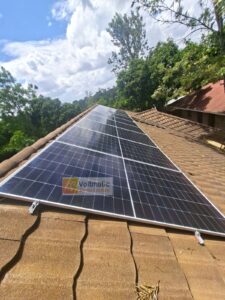
Panel placement directly affects energy production. Installing panels in shaded areas, incorrect angles, or poorly oriented roofs reduces efficiency significantly even with high-quality panels.
How to avoid it:
Ensure panels are installed in areas with maximum sunlight exposure, ideally with minimal shading throughout the day.
4. Using the Wrong Battery Size or Type
Batteries are often misunderstood. Some homeowners install too small a battery, leading to frequent power shortages, while others overspend on oversized storage they don’t fully utilize.
In some cases, incompatible battery types are paired with the wrong inverter, leading to inefficiencies or system failure.
How to avoid it:
Let your battery capacity be guided by your essential backup needs and daily consumption, not guesswork or sales pressure.
5. Poor Cable Sizing and Electrical Workmanship
Solar systems rely heavily on correct wiring and protection systems. Using undersized cables, poor connections, or missing safety components can lead to power losses, overheating, or even fire risks.
How to avoid it:
Ensure installation is done by certified professionals who follow proper electrical standards and safety protocols.
6. Choosing the Wrong Inverter
The inverter is the heart of your solar system. Installing one that does not match your load requirements or system size can lead to inefficiency, frequent overloads, or system shutdowns.
How to avoid it:
Your inverter should be carefully matched to both your solar panel capacity and household energy demand.
7. Ignoring Future Energy Needs
Many solar systems are designed only for current usage without considering future growth such as additional appliances, home expansion, or increased demand. This often results in costly upgrades or full system replacements later.
How to avoid it:
Work with a solar provider who designs scalable systems that can grow with your future energy needs.
Final Thoughts
A successful solar installation goes beyond buying panels and batteries—it requires informed decisions at every stage, from design to installation. Most solar challenges in homes are not caused by the technology itself, but by poor planning and execution.
When properly designed and installed, solar becomes one of the most reliable and cost-effective energy solutions for long-term use.
For more information, you can reach us via email: info@voltamaticenergysolutios.co.ke or call us at 0759493610